Curing Guide
Fire-Cured Tobacco: How Kentucky Smokes Its Leaf
Fire-cured tobacco is dark tobacco cured in closed barns over slow, smoldering hardwood fires, so the smoke becomes part of the leaf's flavor.
Updated · Kentucky Cigars Editorial Team
See the Cigars Made With It →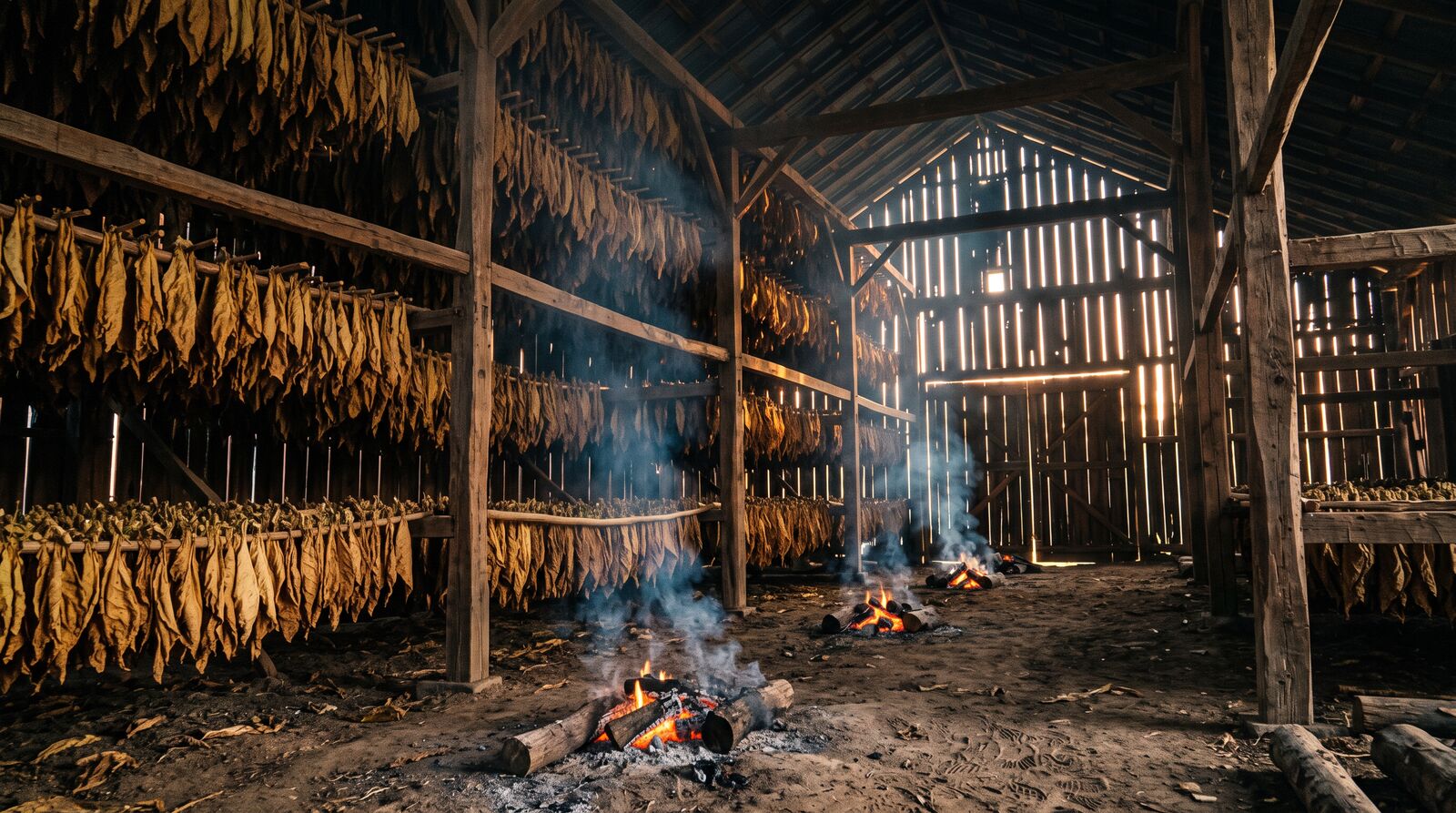
Fire-cured tobacco is one of the oldest ways to cure leaf in America, and western Kentucky and northwestern Tennessee remain its heartland. Instead of simply drying, the harvested plants hang in tall barns while low fires of seasoned hardwood and sawdust smolder on the dirt floor. The process takes weeks, and the result is a dark, heavy-bodied leaf with low sugar and a smoky, savory character that no other curing method produces.
The Four Phases of Dark Fire-Curing
University of Kentucky and University of Tennessee extension guidance breaks dark fire-curing into four phases. The numbers below come from their production guide (AGR-152) and are what experienced curers aim for; every barn and season is a little different.
| Phase | Typical timing | Temperature | What happens |
|---|---|---|---|
| 1. Yellowing | About 5–8 days after housing | Initial fires no higher than 100°F | Leaves lose green color; fires make mostly smoke, little heat; top vents open |
| 2. Setting color | 7–14 days | 100–115°F | Vents closed; one or several firings lock in the brown color |
| 3. Drying | Varies by barn and weather | No higher than 130°F | Heat dries the stems and darkens the midribs |
| 4. Finishing | 10–14 days | 120°F or less | One or two slow firings that maximize smoke for surface finish |
In short: fire-curing is a weeks-long, carefully controlled smoking process. Too much heat scorches the leaf; too little smoke and it never develops the signature flavor.
What Gets Burned
Traditional curers use seasoned hardwood slabs and sawdust. Seasoned wood burns slower and more evenly than soft or green wood, which matters when a fire has to smolder for hours without flaring. Hardwood chips may be added in later firings. Drew Estate, describing the leaf it buys for its Kentucky Fire Cured cigars, names oak, maple and hickory and a smoking period of about 14 days.
The extension guidance is just as clear about what not to add: no sulfur or salt during yellowing or drying, and no molasses or brown sugar during finishing. The flavor is supposed to come from wood smoke and the leaf itself.
Inside a Fire-Curing Barn
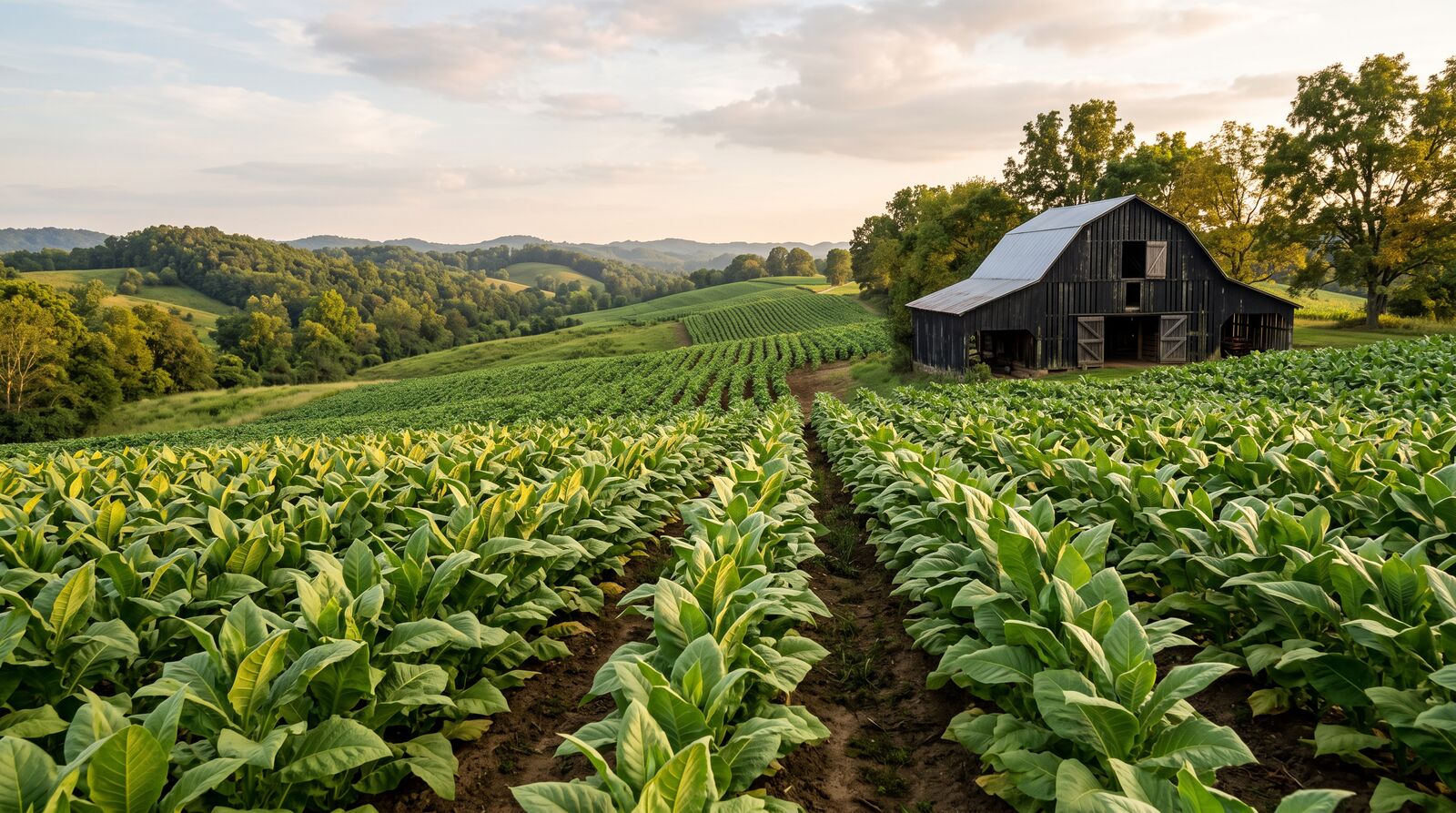
Dark-fired barns are tall, tight structures built in tiers. Tobacco hangs on wooden sticks — roughly 8 inches apart in newer barns with wider tier spacing and about 12 inches apart in older barns. Vents near the roof let curers manage airflow, opening them early for yellowing and closing them to hold heat while color sets. Many of these barns are painted black, which is part of why the region came to be called the Black Patch.
Why Fire-Curing Changes the Flavor
Smoke and slow heat do three things to the leaf. They darken it, they reduce its sugar compared with flue-cured tobacco, and they deposit aromatic smoke compounds on its surface. Smokers describe the result as savory and meaty more than sweet — hickory, cured ham, leather and dark wood, with a natural sweetness that shows up on the finish.
That character is why dark fire-cured tobacco has long been the backbone of snuff, chewing tobacco and some pipe blends, and why it works as a seasoning leaf in cigars rather than as the entire blend.
Fire-Cured vs. Latakia vs. Air-Cured
| Leaf | Process | Character |
|---|---|---|
| Kentucky / Tennessee dark fire-cured | Smoked over hardwood fires for weeks | Savory, hickory, meaty, low sugar |
| Latakia (pipe tobacco) | Oriental leaf smoked over aromatic woods and herbs | Intense campfire, incense, pine |
| Air-cured cigar leaf | Dried naturally in ventilated barns, then fermented | Earth, cedar, cocoa, spice |
| Kentucky burley | Air-cured, light-bodied leaf | Nutty, mild; mostly used in blends |
From the Barn to the Cigar
Most premium cigar tobacco is air-cured and fermented, so fire-cured leaf is used carefully. In the Kentucky Fire Cured cigar line, for example, the fire-cured tobacco appears in the filler and as a dark wrapper over the head of the cigar, with a Mexican San Andrés wrapper at the foot to round it out. That combination gives you smoke without letting it take over.
The leaf comes out of a long regional tradition — and a turbulent one. Read about the farmers who fought to keep it profitable in our Kentucky tobacco history guide.
Frequently Asked Questions
What is fire-cured tobacco?
Fire-cured tobacco is dark tobacco cured in closed barns over low, smoldering hardwood fires for several weeks, which gives it a smoky, savory flavor and low sugar content.
How long does it take to fire-cure tobacco?
Dark fire-curing usually takes several weeks across four phases: yellowing (about 5 to 8 days), setting color (7 to 14 days), drying, and a 10- to 14-day finishing period.
What wood is used to fire-cure tobacco?
Curers traditionally burn seasoned hardwood slabs and sawdust; Drew Estate says the leaf in its Kentucky Fire Cured cigars is smoked over oak, maple and hickory.
Where is fire-cured tobacco grown?
Dark fire-cured tobacco is grown mainly in western Kentucky and northwestern Tennessee, the region historically known as the Black Patch, with some production in Virginia.
Is fire-cured tobacco the same as Latakia?
No. Latakia is oriental tobacco smoked over aromatic woods and herbs for pipe blends, while Kentucky fire-cured tobacco is dark leaf smoked over hardwood and tastes more savory than incense-like.